

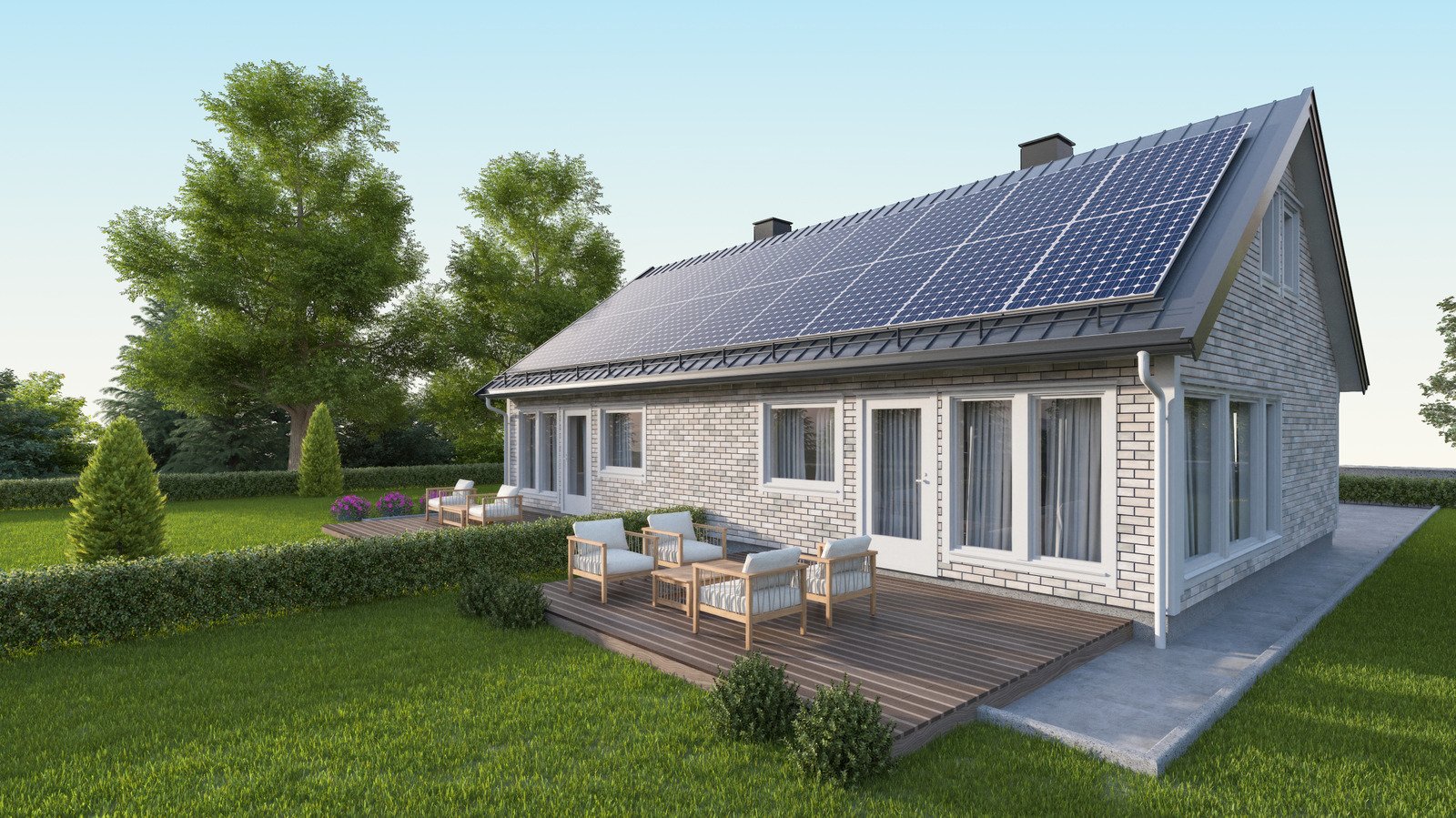
On the surface, adding solar panels to your home seems like a fantastic idea. They can cut down your monthly electricity bills, potentially increase the resale value of your home and deliver clean, renewable and environmentally friendly energy to your residence. Some states and utility companies even provide solar incentives to homeowners in the form of rebates and income tax credits.
With all that in mind, why wouldn’t you want to add solar panels to your home? Well, for all the good they can do, solar panels also come with plenty of drawbacks, especially if you don’t live in a state with solar-friendly regulations, your home isn’t geographically positioned to take full advantage of solar energy or your electricity bill isn’t all that high to begin with.
The cost is significant
The average price to install a solar power system in a typical home falls between $20,000 and $27,000, with a national benchmark of $3.36 per watt, before any incentives or rebates are applied. Prior to 2026, homeowners could rely on a federal 30 percent tax credit to soften the blow, but the Trump administration terminated that incentive.
The upfront expense might not be worth the investment, depending on a few factors. First, consider your electricity rate and usage. Some areas charge more for electricity than others, with the 10 most expensive states being Hawaii, Maine, Massachusetts, California, Alaska, New York, Rhode Island, New Hampshire, New Jersey and Connecticut.
If you don’t reside in one of those states, installing solar power may not significantly impact your electricity bill, especially if you live in a smaller home, have a small household (people-wise), use energy-efficient appliances and tend not to consume much energy in a given month.
You should also research whether your utility company offers net metering or other incentives and rebates. Net metering gives homeowners credits for any excess energy produced by their solar panels, allowing you to reduce or even potentially erase a monthly electric bill. This incentive is not available everywhere, and the programs differ by state.
For example, the most advantageous programs for solar panel users offer a one-to-one power exchange that credits you at the same retail rate you pay for your power. Other states utilize buyback programs or reduced-rate or net billing structures that credit homeowners a portion of what they pay for energy.
Location and/or roof design can make solar panels a waste of money
Some geographic locations are simply better than others when it comes to solar panels. Places with consistent sunlight and moderate-to-cool temperatures are best. An abundance of overcast weather or excessive heat can negatively impact panel performance and life.
The design of your house also needs to be considered. Solar panels are almost always installed on roofs that face south and are clear of buildings, trees or other objects that may block sunlight. If your roof is on the older side, solar panels aren’t ideal unless you have a new roof installed, and that can cost anywhere from $4,000 to more than $35,000 depending on the size of your home and the type of roof.
Then there are simple aesthetics. Some homeowners, especially those who just paid for a brand new roof, don’t want to cover it up with bulky and — let’s face it — unattractive solar panels. Solar shingles are an alternative option, but they’ve attracted some negative press and also cost roughly twice the price per watt as standard solar panels. At $21 to $25 per square foot installed, the price to install solar shingles on a 2,500-square-foot home comes to between $52,500 and $62,500 before incentives.
Battery backup makes solar installation even more expensive
Aside from lowering monthly electric bills and moving toward clean energy, having backup power during blackouts is a major appeal for homeowners looking to switch to solar, but it’s not as simple as many people think. When your home loses power, solar energy doesn’t just kick into gear. It requires a battery backup system that stores excess solar energy from the panels, then delivers it to your home when the power is out. And — you guessed it — it’s expensive.
For a single-battery backup system, which is enough to power the average home’s lights, refrigerator, WiFi and some power outlets during outages, you’re looking at spending between $10,000 and $16,000. If you want a whole-home, multi-battery backup, which can power your home’s HVAC system and all appliances, that price range escalates to $22,000 to $40,000, plus routine maintenance costs.
That all combines to drastically increase your solar investment and potentially extend the payback period, which can lead to major problems if you decide you want to move before the system is paid off.
It may be harder to sell your home if you plan on moving
Solar panels can add resale value to your home, but there’s a major caveat to consider: If you haven’t fully paid off the cost of your home’s solar equipment, prospective homebuyers may view that as a negative.
Why? Because if you opted to finance the installation cost or entered into a power purchase agreement (PPA) with your utility company, the buyer must agree to assume the remainder of the contract. If the buyer refuses to take over the contract, the most straightforward solution is to pay off the balance. Unfortunately, that’s also the most expensive solution.
Here’s another drawback: whoever buys your home must also qualify for the lease on the solar equipment. Being approved for a mortgage is separate from being approved for a solar lease, so if the buyer isn’t approved for the solar lease, the entire home sale could fall apart. Plus, the lease-approval process can take up to two months, so this would need to be taken care of well ahead of closing.
Then there’s the UCC-1, which is essentially a lien against the solar equipment filed by most solar leasing companies with local land registries. Because the UCC-1 turns up in property title searches, this can turn into a huge problem if the buyer’s mortgage lender refuses to close the transaction because of this open, pending issue. And it does happen because the bank providing the mortgage loan does not want to have a solar company standing in front of them should the house need to be seized and sold by the lender to recoup its money. Lenders can, and do, often refuse to provide the buyer with the loan as long as the UCC-1 remains active.
