Close Menu
techwavedispatch.com

    Subscribe to Updates

    Get the latest creative news from FooBar about art, design and business.

    What's Hot

    Benchmarking EEG feature families for ADHD research in children and adolescents: performance and explainability across attention tasks

    November 24, 2026

    The Download: AI’s gas power boom and a consciousness reality check

    November 24, 2026

    Uber And Lucid Start Testing Fully Driverless Rides For Their Robotaxis In San Francisco

    November 24, 2026
    Facebook X (Twitter) Instagram
    Trending
    • Benchmarking EEG feature families for ADHD research in children and adolescents: performance and explainability across attention tasks
    • The Download: AI’s gas power boom and a consciousness reality check
    • Uber And Lucid Start Testing Fully Driverless Rides For Their Robotaxis In San Francisco
    • Explaining Logit-Lens Scores in Features Instead of Tokens
    • How NERC’s Data Center Power Rules Tackle Power Swings
    • Scalable Beckmann Maps Improve One-step Generation
    • 8 Best Espresso Machines for Home (2026), Tested by Coffee Pros
    • [2509.16002] Resource-Efficient Quantum Reinforcement Learning on NISQ Devices with Dynamic-Circuit Qubit Reuse and Grover-Based Trajectory Search
    Facebook X (Twitter) Instagram
    techwavedispatch.com
    Subscribe
    Tuesday, November 24
    • Home
    • AI Tools & Software
    • Machine Learning
    • Generative AI
    • Robotics & Automation
    • Future Tech & Hardware
    • AI in Business
    • Ethics & Regulations
    • More
      • Gadgets & Smart Devices
      • Cybersecurity & AI
      • Tech Breakthroughs
    techwavedispatch.com
    Home»Future Tech & Hardware»Why using rocks for carbon removal could eventually reduce crop growth
    Future Tech & Hardware

    Why using rocks for carbon removal could eventually reduce crop growth

    adminBy adminNovember 23, 2026No Comments3 Mins Read
    Facebook Twitter Pinterest LinkedIn Tumblr Email
    Why using rocks for carbon removal could eventually reduce crop growth
    Share
    Facebook Twitter LinkedIn Pinterest Email

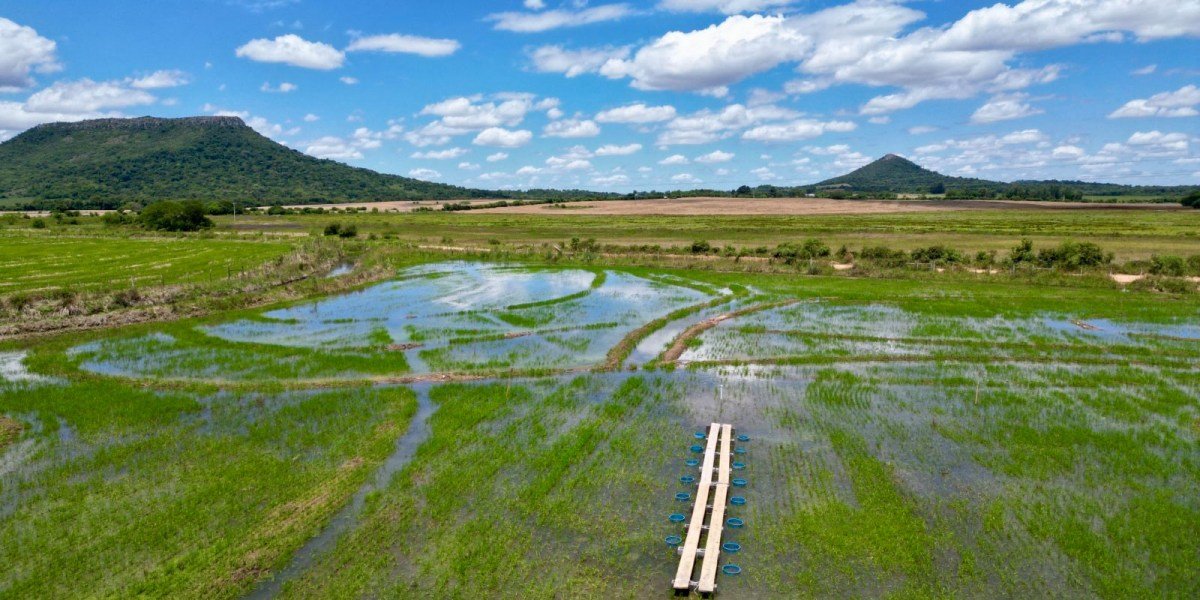
    But the big selling point is that there can be an economic benefit to doing it; it’s not just a cost like other forms of carbon removal. Added to agricultural soils, these sorts of rocks can increase nutrients, reduce acidity, and improve water retention, helping to boost crop yields (at least up to a point). Indeed, many farmers already routinely add crushed-up limestone to their soil to counteract the increased acidity caused by fertilizer use and other agricultural practices. 

    So carrying out enhanced rock weathering could merely be a matter of switching to other types of rock with the potential to lock away more carbon (about twice as much as limestone).

    “It’s something the Earth has been doing for billions of years,” says Mary Yap, chief executive and cofounder of Lithos Carbon, an ERW startup. “It can scale. We know it works kinetically.”

    “If we can figure out where in the world are the best places to do this and then make that happen,” she adds, “it can help both the communities and also help our atmosphere.”

    Enhanced rock weathering could be of particular benefit to farmers who haven’t been able to manage their soil acidity, including many subsistence farmers in poorer parts of the world, says Tim Jesper Suhrhoff, a postdoctoral fellow at the Yale Center for Natural Carbon Capture. One recent study found that ERW boosted the median yields of smallholder farmers in India by more than 20%.

    “That is huge for subsistence farmers,” he says.

    Agricultural limits

    But the new findings, which have not yet been peer-reviewed, suggest there could be a steep trade-off, at a certain point, between benefits for farmers and benefits for the climate.

    A number of modeling studies that inform UN climate reports and national climate efforts have estimated that adding crushed rock to agricultural land could store away four to 12 tons of carbon dioxide per hectare per year (though some estimate lower levels). But the authors state in one of the new papers that these findings don’t account for the ways that significant levels of enhanced rock weathering will alter the pH of agricultural soil over time. 

    Initially it should merely reduce the soil acidity, but adding too much of these materials would eventually push up the pH beyond neutral and into alkaline territory. That could cause micronutrient deficiencies, disease susceptibility, and other problems for certain crops, potentially reducing yields—and, by extension, food supplies and farm revenue. That would likely force farmers to halt the practice, at least until soil pH returns to favorable levels.

    Carbon crop eventually growth reduce removal rocks
    Share. Facebook Twitter Pinterest LinkedIn Tumblr Email
    admin
    • Website

    Related Posts

    Data centers are getting their own natural gas power plants

    November 24, 2026

    A legendary philosopher isn’t buying Anthropic’s consciousness argument

    November 23, 2026

    The Download: AI’s judgment problem and carbon removal’s crop threat

    November 23, 2026
    Leave A Reply Cancel Reply

    Top Posts

    NVIDIA Is Investigating Reports That CEO Jensen Huang Was The Target Of Chinese Spy Efforts

    November 8, 202619 Views

    ADIndex: Layer-Adaptive Sparse Attention Indexing via Group-Level Distillation

    November 11, 20266 Views

    Anthropic releases new Mythos and Fable models amid RSI concerns

    November 9, 20266 Views

    If AGI is so close, why is everyone leaving? The neolabs and their bets

    November 6, 20266 Views
    Don't Miss
    Machine Learning

    Benchmarking EEG feature families for ADHD research in children and adolescents: performance and explainability across attention tasks

    By adminNovember 24, 20260

    arXiv:2611.28299v1 Announce Type: new Abstract: Attention Deficit Hyperactivity Disorder varies in presentation. Diagnosis requires clinical…

    The Download: AI’s gas power boom and a consciousness reality check

    November 24, 2026

    Uber And Lucid Start Testing Fully Driverless Rides For Their Robotaxis In San Francisco

    November 24, 2026

    Explaining Logit-Lens Scores in Features Instead of Tokens

    November 24, 2026
    About Us

    Welcome to TechWave Dispatch

    At TechWave Dispatch, we bring you the latest news, insights, and developments from the ever-evolving world of technology. Our mission is to keep readers informed about the innovations shaping our digital future.

    From artificial intelligence and machine learning to cybersecurity, robotics, smart devices, and groundbreaking technologies, we cover the topics that matter in today's fast-moving tech landscape.

    Our Picks

    Benchmarking EEG feature families for ADHD research in children and adolescents: performance and explainability across attention tasks

    November 24, 2026

    The Download: AI’s gas power boom and a consciousness reality check

    November 24, 2026

    Uber And Lucid Start Testing Fully Driverless Rides For Their Robotaxis In San Francisco

    November 24, 2026
    Most Popular

    Ads in Chatbots Have Arrived. Here’s What’s Working—and What’s Not

    November 6, 20260 Views

    The General Purpose Pendulum – O’Reilly

    November 6, 20260 Views

    Robot Videos: Home Cable Robot, JPL turns 90, and More

    November 6, 20260 Views
    Facebook X (Twitter) Instagram Pinterest
    • Terms and Conditions
    • Privacy Policy
    • Contact Us
    • About Us
    © 2026 TechWave Dispatch. All Rights Reserved.

    Type above and press Enter to search. Press Esc to cancel.