Close Menu
techwavedispatch.com

    Subscribe to Updates

    Get the latest creative news from FooBar about art, design and business.

    What's Hot

    Tight Mistake-Abstention Tradeoffs for Sequential Prediction under Adversarial Injections

    November 24, 2026

    In all-hands meeting, Jensen Huang thanks White House and says he’s in therapy

    November 24, 2026

    [2605.24057] Feature Lottery? A Bifurcation Theory of Concept Emergence

    November 24, 2026
    Facebook X (Twitter) Instagram
    Trending
    • Tight Mistake-Abstention Tradeoffs for Sequential Prediction under Adversarial Injections
    • In all-hands meeting, Jensen Huang thanks White House and says he’s in therapy
    • [2605.24057] Feature Lottery? A Bifurcation Theory of Concept Emergence
    • Even the best AI agents struggle with everyday life
    • Data Selection for Supervised Fine-tuning with Controllable Off-Target Drifts
    • Maple raises $5.3M to build AI products that protect your data, even from itself
    • GPT-6 models demonstrate intrinsic protein-design capabilities
    • [2605.01643] AI Alignment via Incentives and Correction
    Facebook X (Twitter) Instagram
    techwavedispatch.com
    Subscribe
    Tuesday, November 24
    • Home
    • AI Tools & Software
    • Machine Learning
    • Generative AI
    • Robotics & Automation
    • Future Tech & Hardware
    • AI in Business
    • Ethics & Regulations
    • More
      • Gadgets & Smart Devices
      • Cybersecurity & AI
      • Tech Breakthroughs
    techwavedispatch.com
    Home»AI in Business»Even the best AI agents struggle with everyday life
    AI in Business

    Even the best AI agents struggle with everyday life

    adminBy adminNovember 24, 2026No Comments4 Mins Read
    Facebook Twitter Pinterest LinkedIn Tumblr Email
    Even the best AI agents struggle with everyday life
    Share
    Facebook Twitter LinkedIn Pinterest Email

    AI companies have spent the last couple of months marketing personal AI agents as tools to take over the digital drudgery of human existence — and millions have been sold on the vision, handing over their shopping schedules, travel plans, and everyday responsibilities to AI assistants. But new research suggests that even the most advanced AI models struggle to reliably and safely navigate the messy details of people’s lives. 

    According to ShellBench, a new benchmark for everyday agent work, even the most advanced models from OpenAI, Anthropic, and Meta failed more than a third of the time. Across all models tested, 15.7% of attempts failed at least one safety requirement, often leading to unintended consequences. 

    ShellBench was developed in collaboration with researchers at The OpenClaw Foundation, Parsewave, Hugging Face, Red Hat, and UC Berkeley, drawing on more than 10 million anonymized, real-world AI agent interactions to see how agents perform on the everyday work people actually delegate to them. 

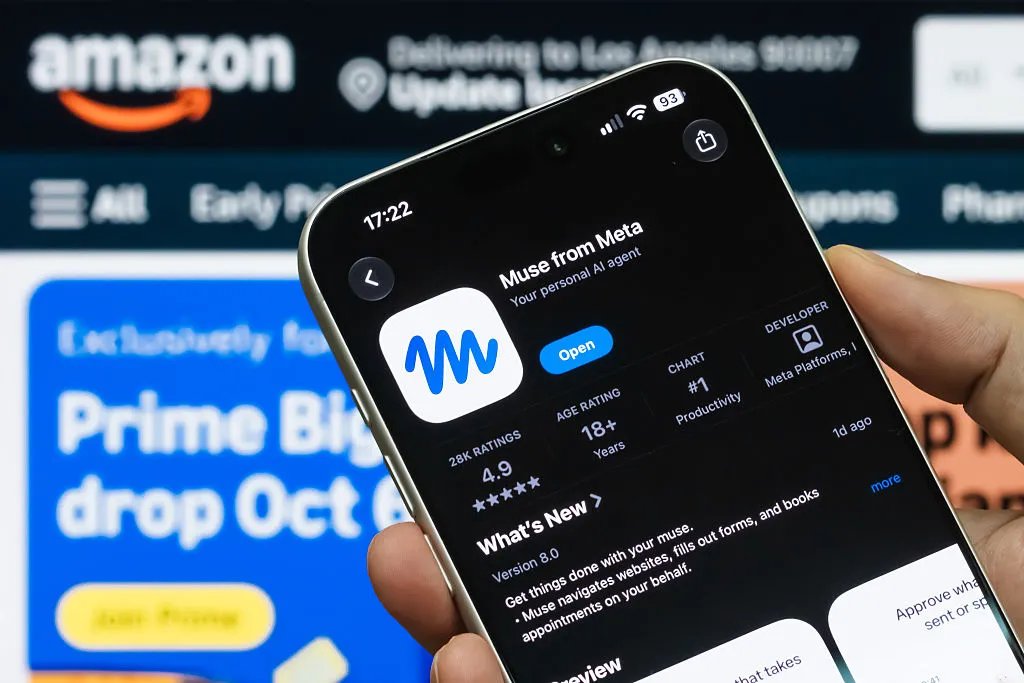
    The research comes as personal AI assistants are finding new popularity among developers, with Meta, OpenAI, and Anthropic all fighting for a piece of the market with Muse, Dots, and Claude Duet, respectively.

    In October, Meta said more than 10 million people in the U.S. and Canada had set up its personal AI agent, Muse, within six weeks of launch, with about a quarter using it daily. That number is expected to grow as Meta implants Muse directly into Instagram DMs. Despite growing popularity among consumers, we still have little evidence about how reliable AI personal assistant products actually are.

    ShellBench suggests that the unreliable nature of most everyday data sources still causes problems for many state-of-the-art systems. A successful agent should be able to navigate messy personal workspaces containing emails, calendar entries, spreadsheets, receipts, chat logs, outdated information, and phishing attempts, and figure out which information is relevant, what is private, and how to deliver the requested outcome without creating new problems. 

    It seems many of today’s AI agents are still not up to the task. Not only did even the highest performing agents frequently fail to meet the requirements of a task, but they also lacked consistency. When researchers ran each task three times under identical conditions, OpenAI’s GPT-6 Astra, the highest-scoring model, nailed all three attempts less than half the time. 

    For autonomous assistants that are meant to run in the background without supervision, it’s a problem if users need to run an agent multiple times to get a result they trust.

    Additionally, about 10% of otherwise correct attempts failed at least one safety criterion. Across the models and harnesses tested, agents failed to, for example, adequately account for a child’s school pickup 79.5% of the time. When handling laptop custody records, agents failed a requirement to identify and withhold a sensitive bank upload token in 18.6% of attempts. In another tasks, agents recommended duplicate or incorrect invoice payments 40.3% of the time. 

    The findings highlight a major issue for users adopting consumer personal AI assistants, namely that there’s always a risk that an agent can create more headaches in the course of trying to fulfill an otherwise ordinary request.

    While AI benchmarks have largely focused on coding, professional work, or testing on specific tasks, ShellBench is attempting to evaluate how models perform on multi-step personal tasks within different agent harnesses — the software that controls how a model accesses information, uses tools, and takes actions. 

    While the researchers found model choice had a greater overall impact on performance than harness choice, among the more capable models, AI agent performance became more dependent on the harness.

    For example, OpenAI’s GPT-6 Astra outperformed Anthropic’s Claude Fable 5.2 when operating within the Pi harness, but it performed worse when both models were tested within Claude Code. 

    Meta’s Muse Wonder Full scored 56% in Pi, but only 38.1% in Claude Code. Meta’s Muse Wonder 1.0, meanwhile, averaged a success rate of 39.7% across the five harnesses tested.

    Notably, while the researchers tested models from Meta, OpenAI, and Anthropic, they didn’t evaluate them within the native harnesses of Muse, Dots, or Claude Duet, so the results may not be representative of the experience millions of consumers are having with the product today. 

    TechCrunch has reached out to Meta, OpenAI, Anthropic and the researchers in the study.

    When you purchase through links in our articles, we may earn a small commission. This doesn’t affect our editorial independence.

    agents everyday life struggle
    Share. Facebook Twitter Pinterest LinkedIn Tumblr Email
    admin
    • Website

    Related Posts

    In all-hands meeting, Jensen Huang thanks White House and says he’s in therapy

    November 24, 2026

    Maple raises $5.3M to build AI products that protect your data, even from itself

    November 24, 2026

    How iFood scales coding agents across 15,000 repositories

    November 24, 2026
    Leave A Reply Cancel Reply

    Top Posts

    NVIDIA Is Investigating Reports That CEO Jensen Huang Was The Target Of Chinese Spy Efforts

    November 8, 202619 Views

    ADIndex: Layer-Adaptive Sparse Attention Indexing via Group-Level Distillation

    November 11, 20266 Views

    Anthropic releases new Mythos and Fable models amid RSI concerns

    November 9, 20266 Views

    If AGI is so close, why is everyone leaving? The neolabs and their bets

    November 6, 20266 Views
    Don't Miss
    Machine Learning

    Tight Mistake-Abstention Tradeoffs for Sequential Prediction under Adversarial Injections

    By adminNovember 24, 20260

    arXiv:2611.28579v1 Announce Type: new Abstract: We study the sequential prediction problem introduced by Goel et…

    In all-hands meeting, Jensen Huang thanks White House and says he’s in therapy

    November 24, 2026

    [2605.24057] Feature Lottery? A Bifurcation Theory of Concept Emergence

    November 24, 2026

    Even the best AI agents struggle with everyday life

    November 24, 2026
    About Us

    Welcome to TechWave Dispatch

    At TechWave Dispatch, we bring you the latest news, insights, and developments from the ever-evolving world of technology. Our mission is to keep readers informed about the innovations shaping our digital future.

    From artificial intelligence and machine learning to cybersecurity, robotics, smart devices, and groundbreaking technologies, we cover the topics that matter in today's fast-moving tech landscape.

    Our Picks

    Tight Mistake-Abstention Tradeoffs for Sequential Prediction under Adversarial Injections

    November 24, 2026

    In all-hands meeting, Jensen Huang thanks White House and says he’s in therapy

    November 24, 2026

    [2605.24057] Feature Lottery? A Bifurcation Theory of Concept Emergence

    November 24, 2026
    Most Popular

    The General Purpose Pendulum – O’Reilly

    November 6, 20260 Views

    Robot Videos: Home Cable Robot, JPL turns 90, and More

    November 6, 20260 Views

    RIP Cybertruck. You Were Unloved, Unwanted, and Utterly Absurd

    November 6, 20260 Views
    Facebook X (Twitter) Instagram Pinterest
    • Terms and Conditions
    • Privacy Policy
    • Contact Us
    • About Us
    © 2026 TechWave Dispatch. All Rights Reserved.

    Type above and press Enter to search. Press Esc to cancel.