Close Menu
techwavedispatch.com

    Subscribe to Updates

    Get the latest creative news from FooBar about art, design and business.

    What's Hot

    Hackers breached the US Air Force’s flagship Cloud One platform, report says

    November 27, 2026

    Walking Pad Deals to Shop This Black Friday (2026)

    November 27, 2026

    Can GTA 6’s staggered release model survive coding agents?

    November 27, 2026
    Facebook X (Twitter) Instagram
    Trending
    • Hackers breached the US Air Force’s flagship Cloud One platform, report says
    • Walking Pad Deals to Shop This Black Friday (2026)
    • Can GTA 6’s staggered release model survive coding agents?
    • SAP plans to cut at least 10,000 jobs as it pivots to AI
    • The 24 Very Best Amazon Black Friday Deals (2026): Up to 60% Off
    • Best Black Friday Robot Vacuum Deals from Roborock (2026): Up to $700 Off
    • This gaming mouse should be a Logitech-killer, but it has one big flaw
    • 22 Best Black Friday Deals Under $100 (2026)
    Facebook X (Twitter) Instagram
    techwavedispatch.com
    Subscribe
    Friday, November 27
    • Home
    • AI Tools & Software
    • Machine Learning
    • Generative AI
    • Robotics & Automation
    • Future Tech & Hardware
    • AI in Business
    • Ethics & Regulations
    • More
      • Gadgets & Smart Devices
      • Cybersecurity & AI
      • Tech Breakthroughs
    techwavedispatch.com
    Home»Future Tech & Hardware»Europa Clipper Will Map an Alien Sea With 50 Flybys
    Future Tech & Hardware

    Europa Clipper Will Map an Alien Sea With 50 Flybys

    adminBy adminNovember 26, 2026No Comments3 Mins Read
    Facebook Twitter Pinterest LinkedIn Tumblr Email
    Europa Clipper Will Map an Alien Sea With 50 Flybys
    Share
    Facebook Twitter LinkedIn Pinterest Email

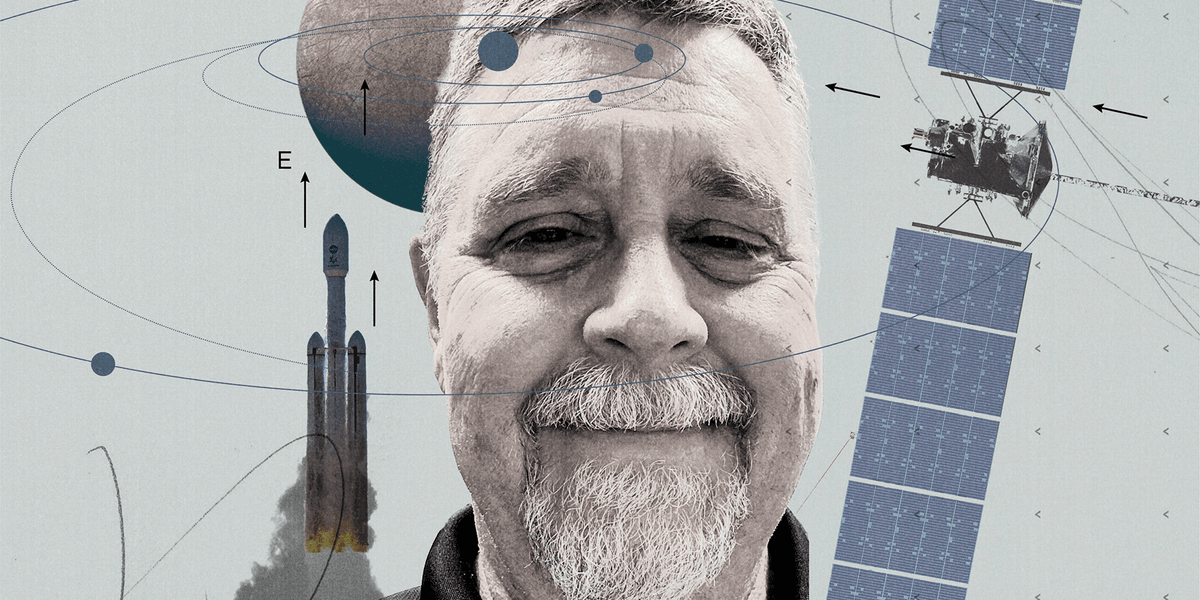
    On 3 December 2026, a 30.5-meter-wide space probe will slingshot past Earth, picking up the speed it needs to reach Jupiter in 2030. The Europa Clipper is designed to investigate Jupiter’s enigmatic moon Europa and look for places that could support life in the ocean beneath the moon’s thick shell of ice. Tim Larson is the project manager for the mission at the Jet Propulsion Laboratory, and he spoke to IEEE Spectrum about designing and flying the Europa Clipper.

    Tim Larson

    Tim Larson is the project manager for NASA’s Europa Clipper mission. He has been at the Jet Propulsion Laboratory in Pasadena, Calif., for over 35 years.

    Why take such a roundabout route to Jupiter?

    Tim Larson: That’s all driven by the energy that we got from our launch vehicle, the Falcon Heavy. It set a MEGA trajectory: Mars-Earth Gravity Assist. So about 4 months after launch, we flew by Mars, got an assist there. Now we’re coming back in for a final assist from Earth to get on our outbound trajectory to Jupiter.

    The Europa Clipper is set to orbit Jupiter and fly by Europa about 50 times to study it. Why not just orbit it directly?

    Larson: The big challenge is the radiation environment. It is so intense that any spacecraft orbiting Europa wouldn’t last very long. So the mission designers came through with this concept of the flybys.

    We will be in a three-week orbit around Jupiter, but the orbit is synchronized so that every time we fly by Jupiter, Europa is right there. Over time, you build up the coverage of the surface that we’re ultimately after. We spend a relatively short time in the high-radiation environment, and then the rest of the orbit is in a more benign environment where we can relay data back down to Earth, et cetera.

    The Europa Clipper relies on solar panels to generate power. Why not use a compact radioisotope thermoelectric generator (RTG)?

    Larson: It’s a national policy to only use RTGs if it is absolutely essential. A lot of the early concepts that focused on orbiting Europa had to go with RTG approaches, because you’d spend so much time in the shadow of Jupiter. Once we shifted over to the flyby mission approach, it turned out solar arrays would be feasible.

    How are Europa Clipper’s electronics different from other probes?

    Larson: One of the things that we dealt with in our design was the level of radiation tolerance that we had to get in all our parts. In our main avionics module—we call it the vault—everything in there is designed to an exposure of 150 kilorads (1,500 sieverts). To get our usual factor-of-two margin, we were buying parts that rated to 300 kilorads.

    That brings up side challenges, because when you buy high-radiation-tolerance versions of parts, you can’t always get the exact same part functionality. You might have to change your circuits a little bit. And they don’t always have the same form factor, so you have to accommodate that.

    How do you preserve fine-grained technical knowledge about the spacecraft over its yearslong mission lifetime?

    Larson: By the time we launch, we try to get everything documented. As we learn about the idiosyncrasies of the spacecraft, we capture that in databases. When we have personnel turnover, we try to have a lot of overlap. We’re looking at how AI can take in this broad array of information we have in multiple different formats and locations, and extract information.

    This article appears in the December 2026 print issue as “Tim Larson.”

    From Your Site Articles

    Related Articles Around the Web

    alien Clipper Europa Flybys map Sea
    Share. Facebook Twitter Pinterest LinkedIn Tumblr Email
    admin
    • Website

    Related Posts

    Cutting-edge prosthetics allow researchers to probe the human mind

    November 27, 2026

    The Marauder's Map: B\'{e}zier Manifolds Reveal Hidden Surfaces for Model Merging and Ensembling

    November 26, 2026

    The Download: Better bionic hands and AI’s natural-gas boom

    November 26, 2026
    Leave A Reply Cancel Reply

    Top Posts

    NVIDIA Is Investigating Reports That CEO Jensen Huang Was The Target Of Chinese Spy Efforts

    November 8, 202620 Views

    Mixture of Experts Explained

    November 13, 202610 Views

    Finetuning olmOCR to be a faithful OCR-Engine

    November 10, 20268 Views

    Anthropic launches Claude Meetings to turn workplace discussions into plans and tasks

    November 10, 20267 Views
    Don't Miss
    AI Tools & Software

    Hackers breached the US Air Force’s flagship Cloud One platform, report says

    By adminNovember 27, 20260

    Hackers breached the US Air Force’s flagship cloud platform. Reuters reports that attackers penetrated Cloud…

    Walking Pad Deals to Shop This Black Friday (2026)

    November 27, 2026

    Can GTA 6’s staggered release model survive coding agents?

    November 27, 2026

    SAP plans to cut at least 10,000 jobs as it pivots to AI

    November 27, 2026
    About Us

    Welcome to TechWave Dispatch

    At TechWave Dispatch, we bring you the latest news, insights, and developments from the ever-evolving world of technology. Our mission is to keep readers informed about the innovations shaping our digital future.

    From artificial intelligence and machine learning to cybersecurity, robotics, smart devices, and groundbreaking technologies, we cover the topics that matter in today's fast-moving tech landscape.

    Our Picks

    Hackers breached the US Air Force’s flagship Cloud One platform, report says

    November 27, 2026

    Walking Pad Deals to Shop This Black Friday (2026)

    November 27, 2026

    Can GTA 6’s staggered release model survive coding agents?

    November 27, 2026
    Most Popular

    Detecting signs of hypertension using wearable sensors

    November 6, 20260 Views

    Serverless MCP server for AI agent data lake access on Amazon ECS Fargate

    November 6, 20260 Views

    A Way Forward with Communal Computing – O’Reilly

    November 6, 20260 Views
    Facebook X (Twitter) Instagram Pinterest
    • Terms and Conditions
    • Privacy Policy
    • Contact Us
    • About Us
    © 2026 TechWave Dispatch. All Rights Reserved.

    Type above and press Enter to search. Press Esc to cancel.