

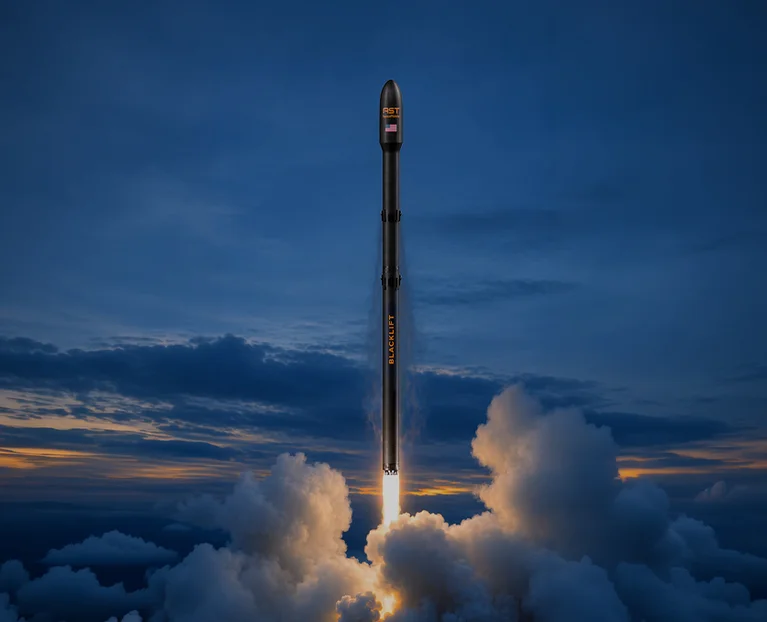
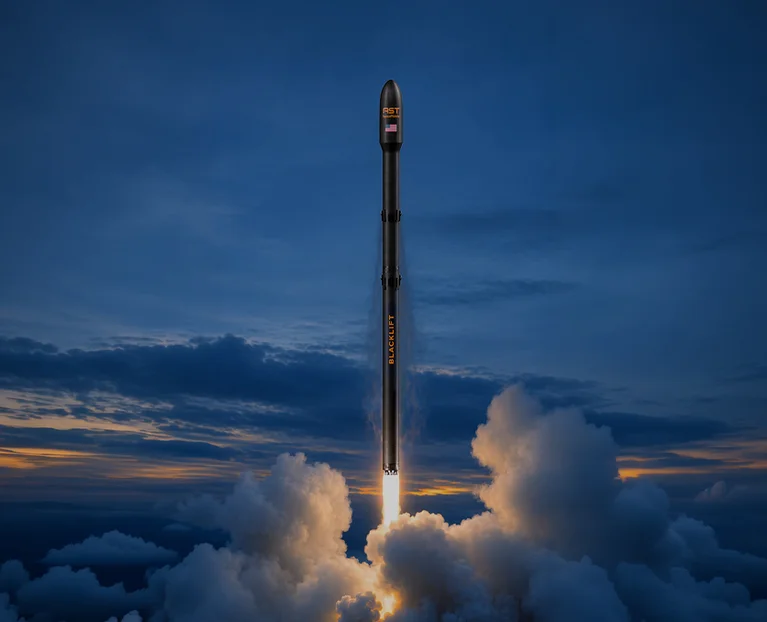
The Blacklift rocket will be “simple,” he said, because it will be solely tailored to lift five Bluebird satellites into low-Earth orbit at a time. It will have 20 metric tons of lift capacity, a reusable first stage, and launch twice a month from a pad at Wallops Flight Facility in Virginia that formerly served the Antares rocket. It will have all composite tanks and three stages. And, Avellan said, it will be ready to launch in 2028.
If that timeline sounds preposterous, that’s because it is.
However, Avellan believes AST has a workaround: It is committed to spending $1.3 billion to acquire enough engines for the first three Blacklift launches from Firefly Aerospace, as well as a license to manufacture additional engines over time. He is basing this argument on the Miranda first stage engine, which he said is “ready to fly.”
But that’s not quite true. However, Miranda has not yet completed its formal qualification campaign, much less flown on an orbital rocket. Firefly chief executive Jason Kim said this week that qualification testing remains underway. Moreover, little is known publicly about the readiness of the upper stage engine, Vira, that AST is also acquiring from Firefly for its rocket.
Composites are hard, too
Another questionable assertion is Avellan’s statement that 80 percent of a rocket’s design cycle is due to engine development. “I mean, that has been proven,” he said.
I’m not sure it has. Propulsion is definitely one of the most challenging aspects of developing a rocket.
However, Rocket Lab, which has considerably more experience building orbital rockets than AST, has suffered two significant setbacks this year involving Neutron’s composite propellant tanks. These structures, as well as flight software, avionics, stage separation, payload fairings, qualification testing, and so much more, can lead to significant delays in the development of a rocket. And then there are the equally difficult challenges of scaling from development to production at rate, and recovering the first stage.
