Close Menu
techwavedispatch.com

    Subscribe to Updates

    Get the latest creative news from FooBar about art, design and business.

    What's Hot

    Overview of NLPCC 2026 Shared Task 4

    November 26, 2026

    Diffusion Ensembles for Retrosynthesis Prediction with SMILES Adapted Particle Guidance

    November 26, 2026

    Robust Data Pruning via Unified Latent Space Topology

    November 26, 2026
    Facebook X (Twitter) Instagram
    Trending
    • Overview of NLPCC 2026 Shared Task 4
    • Diffusion Ensembles for Retrosynthesis Prediction with SMILES Adapted Particle Guidance
    • Robust Data Pruning via Unified Latent Space Topology
    • Casper: A Projection-Based Neurosymbolic Layer for Scalable & Guaranteed Constraint Satisfaction
    • [2510.04769] Fixed Points and Envelope Dynamics on Credal Hyperspaces
    • Nvidia hits pause on chip shipments to Southeast Asia
    • 1Password Says It Was Hacked But Users’ Vaults Are Safe
    • Deletion You Can Check: Auditing LLM Unlearning
    Facebook X (Twitter) Instagram
    techwavedispatch.com
    Subscribe
    Thursday, November 26
    • Home
    • AI Tools & Software
    • Machine Learning
    • Generative AI
    • Robotics & Automation
    • Future Tech & Hardware
    • AI in Business
    • Ethics & Regulations
    • More
      • Gadgets & Smart Devices
      • Cybersecurity & AI
      • Tech Breakthroughs
    techwavedispatch.com
    Home»Ethics & Regulations»EPA reports ‘zero’ airborne lead following controlled Army detonation in Iowa
    Ethics & Regulations

    EPA reports ‘zero’ airborne lead following controlled Army detonation in Iowa

    adminBy adminNovember 25, 2026No Comments3 Mins Read
    Facebook Twitter Pinterest LinkedIn Tumblr Email
    EPA reports ‘zero’ airborne lead following controlled Army detonation in Iowa
    Share
    Facebook Twitter LinkedIn Pinterest Email

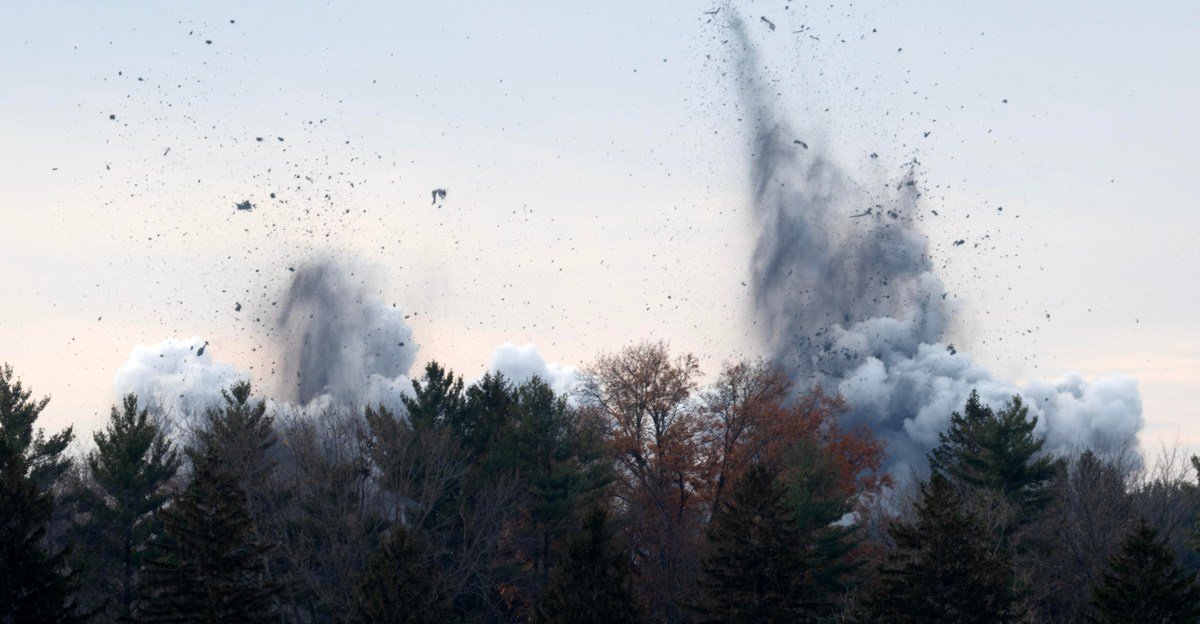
    Saying it was necessary to prevent the possible spontaneous explosion of a stockpile of material used in igniters and blasting caps, the US Army conducted a controlled detonation of over 9,700 pounds of lead azide today at the Iowa Army Ammunition Plant (IAAAP) in Middletown, Iowa. Videos of the detonation showed plumes of smoke several hundred feet high drifting south before quickly dissipating.

    Following the explosion, the Army confirmed that all of the barrels at the plant had been destroyed without any secondary explosions or infrastructure damage. “I believe, absolutely, that we reduced, as close to zero as it’s absolutely humanly possible, the risk to the health and safety of the people of Middletown and the extended communities throughout Iowa,” said Maj. Gen. Eric Shirley during a press conference held two hours after the blast, according to the Associated Press.

    The US Environmental Protection Agency (EPA) has been monitoring the area around the ammunition plant leading up to today’s event. According to a statement from the EPA following the detonation, “real-time air monitors are reporting zero detection of airborne lead throughout the region” an hour after the detonation. The data collected by EPA employees, contractors, and monitoring equipment is shared here.

    The Army has used lead azide in munitions for nearly a century but began transitioning away from the material around 15 years ago because it can be difficult to transport and store. Over time, the material can degrade and crystallize and eventually become unstable enough to detonate at ambient temperatures. The Iowa ammunition plant housed 68 barrels containing about 9,700 pounds of lead azide, representing the country’s remaining stockpile. For safety reasons, the material was stored in liquid form embedded in sawdust and burlap bags while water and ethanol were added to prevent freezing. However, the decision was made to detonate the stockpile after an inspection by the Bureau of Alcohol, Tobacco, Firearms (ATF) discovered “significant crystallization on the exterior of the barrels” last March.

    Ahead of today’s detonation, the Federal Emergency Management Agency (FEMA) supported a recommended, but voluntary, temporary relocation of all the residents of Middletown and immediate surrounding areas that began yesterday. A cone-shaped evacuation zone extends about five miles southwest of the ammunition plant to account for the post-explosion dispersion and deposition path of dust. Displaced residents will be lodged until Friday, November 27th, and can return home once the all-clear has been given.

    To reduce the amount of lead dust released into surrounding areas and the environment, the Army said it took several additional precautions as part of today’s detonation. Walls made of four 16,000-gallon water tanks were installed to capture lead particulate, while the aging earth-covered magazines holding the barrels were covered with tarps and lead containment screens and flooded with foam.

    airborne army controlled detonation EPA Iowa lead reports
    Share. Facebook Twitter Pinterest LinkedIn Tumblr Email
    admin
    • Website

    Related Posts

    Android app developers will soon have to share their address publicly

    November 26, 2026

    Federal judge blocks the FCC from reviewing ABC’s licenses early

    November 26, 2026

    42 state AGs are trying to stop Character.AI from selling users’ chats

    November 26, 2026
    Leave A Reply Cancel Reply

    Top Posts

    NVIDIA Is Investigating Reports That CEO Jensen Huang Was The Target Of Chinese Spy Efforts

    November 8, 202620 Views

    Mixture of Experts Explained

    November 13, 202610 Views

    Finetuning olmOCR to be a faithful OCR-Engine

    November 10, 20268 Views

    ADIndex: Layer-Adaptive Sparse Attention Indexing via Group-Level Distillation

    November 11, 20266 Views
    Don't Miss
    Machine Learning

    Overview of NLPCC 2026 Shared Task 4

    By adminNovember 26, 20260

    [Submitted on 18 Mar 2026 (v1), last revised 25 Nov 2026 (this version, v2)] Authors:Liyuan…

    Diffusion Ensembles for Retrosynthesis Prediction with SMILES Adapted Particle Guidance

    November 26, 2026

    Robust Data Pruning via Unified Latent Space Topology

    November 26, 2026

    Casper: A Projection-Based Neurosymbolic Layer for Scalable & Guaranteed Constraint Satisfaction

    November 26, 2026
    About Us

    Welcome to TechWave Dispatch

    At TechWave Dispatch, we bring you the latest news, insights, and developments from the ever-evolving world of technology. Our mission is to keep readers informed about the innovations shaping our digital future.

    From artificial intelligence and machine learning to cybersecurity, robotics, smart devices, and groundbreaking technologies, we cover the topics that matter in today's fast-moving tech landscape.

    Our Picks

    Overview of NLPCC 2026 Shared Task 4

    November 26, 2026

    Diffusion Ensembles for Retrosynthesis Prediction with SMILES Adapted Particle Guidance

    November 26, 2026

    Robust Data Pruning via Unified Latent Space Topology

    November 26, 2026
    Most Popular

    Robot Videos: Home Cable Robot, JPL turns 90, and More

    November 6, 20260 Views

    RIP Cybertruck. You Were Unloved, Unwanted, and Utterly Absurd

    November 6, 20260 Views

    After printing 40,000 whistles, this is the 3D printer I’d buy

    November 6, 20260 Views
    Facebook X (Twitter) Instagram Pinterest
    • Terms and Conditions
    • Privacy Policy
    • Contact Us
    • About Us
    © 2026 TechWave Dispatch. All Rights Reserved.

    Type above and press Enter to search. Press Esc to cancel.