Close Menu
techwavedispatch.com

    Subscribe to Updates

    Get the latest creative news from FooBar about art, design and business.

    What's Hot

    Whoop Humans Is A Social Network Designed For Fitness Enthusiasts

    November 13, 2026

    Adversarial Risk in the Generative AI Era Necessitates Dropping the Small Epsilon Ball

    November 13, 2026

    Llama 2 learns to code

    November 13, 2026
    Facebook X (Twitter) Instagram
    Trending
    • Whoop Humans Is A Social Network Designed For Fitness Enthusiasts
    • Adversarial Risk in the Generative AI Era Necessitates Dropping the Small Epsilon Ball
    • Llama 2 learns to code
    • More autonomy, fewer NDAs: Volunteers have new requests for brain implant trials
    • Model-Free Reinforcement Learning with Replay Graphs
    • Silicon Valley claims to know the future. So why did it get the midterms so wrong?
    • Deprecation of Git Authentication using password
    • An Open Dataset and Agentic Framework for CUDA Kernel Generation
    Facebook X (Twitter) Instagram
    techwavedispatch.com
    Subscribe
    Friday, November 13
    • Home
    • AI Tools & Software
    • Machine Learning
    • Generative AI
    • Robotics & Automation
    • Future Tech & Hardware
    • AI in Business
    • Ethics & Regulations
    • More
      • Gadgets & Smart Devices
      • Cybersecurity & AI
      • Tech Breakthroughs
    techwavedispatch.com
    Home»Future Tech & Hardware»More autonomy, fewer NDAs: Volunteers have new requests for brain implant trials
    Future Tech & Hardware

    More autonomy, fewer NDAs: Volunteers have new requests for brain implant trials

    adminBy adminNovember 13, 2026No Comments3 Mins Read
    Facebook Twitter Pinterest LinkedIn Tumblr Email
    More autonomy, fewer NDAs: Volunteers have new requests for brain implant trials
    Share
    Facebook Twitter LinkedIn Pinterest Email

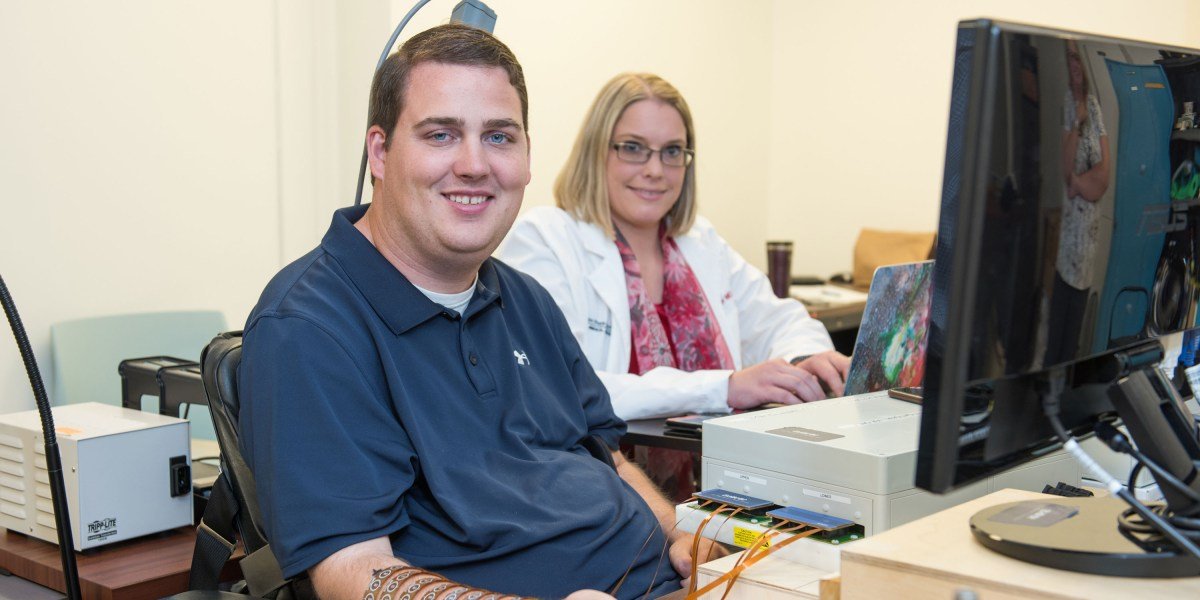
    The guidelines state that brain data “should be understood as the participant’s personal information.” They are pushing for participants to be able to access their own brain data whenever they want—something that has not always been possible—and want to make sure people aren’t prevented from sharing it with their own doctors because of embargoes or nondisclosure agreements (NDAs) designed to keep findings under wraps from competitors.

    “It’s not super common for there to be firm NDAs within a lot of the trials,” says Burkhart. “But it’s something where we want to make sure that that does not happen.”

    The guidelines also address what comes after a trial. Around five years after Burkhart had his device implanted, the research team ran into some issues with funding. When we last spoke a few years ago, he recalled how he was told he would have to have the implant removed and could have it put back in once the team had secured funding. (And we’re talking about brain surgery here.)

    Ultimately, he kept the implant until 2021, when it was removed after an infection started to develop at the point where the cable led into his scalp. But losing the device after all those years was difficult; he’d regained the ability to move his arm—and then lost it again.

    Rita Leggett, an Australian woman who had a device implanted in her brain to treat her epilepsy, has said she felt she “became one” with her implant. When the company that made it went bust two years later, the device was removed against her will—an act ethicists have described as a potential breach of human rights.

    Researchers should instead commit to maintaining brain devices for a “reasonable period” after a trial ends, according to the guidelines. Participants should be given plenty of time to prepare for the surgery to remove it. And researchers should set aside extra funds to support trial participants who have to do that.

    Some of the guidelines are vague and may overlap with existing ethics standards. They don’t all spell out explicit solutions. They were also developed with feedback from a small group of individuals—the number of people living with BCIs is still very low. The team hopes to grow and expand on the guidelines over time. Burkhart also plans to discuss them with researchers at an upcoming neuroscience conference.

    “This is a living document, and this is version one,” says Chandler. “It’s just the starting point.”

    autonomy brain Implant NDAs Requests Trials Volunteers
    Share. Facebook Twitter Pinterest LinkedIn Tumblr Email
    admin
    • Website

    Related Posts

    Europe Plans Arctic Undersea Cables Amid Rising Tensions

    November 12, 2026

    Smarter AI Product Design Centers the User’s Real Needs

    November 11, 2026

    National Science Foundation Fuels High-Risk X-Labs

    November 11, 2026
    Leave A Reply Cancel Reply

    Top Posts

    NVIDIA Is Investigating Reports That CEO Jensen Huang Was The Target Of Chinese Spy Efforts

    November 8, 202619 Views

    ADIndex: Layer-Adaptive Sparse Attention Indexing via Group-Level Distillation

    November 11, 20265 Views

    Anthropic releases new Mythos and Fable models amid RSI concerns

    November 9, 20265 Views

    Anthropic says AI is eroding Nvidia’s CUDA lead, cutting an AMD chip switch from months to three days

    November 11, 20264 Views
    Don't Miss
    Gadgets & Smart Devices

    Whoop Humans Is A Social Network Designed For Fitness Enthusiasts

    By adminNovember 13, 20260

    Members can only share data from their Whoop wearables as guarantee of authenticity. …

    Adversarial Risk in the Generative AI Era Necessitates Dropping the Small Epsilon Ball

    November 13, 2026

    Llama 2 learns to code

    November 13, 2026

    More autonomy, fewer NDAs: Volunteers have new requests for brain implant trials

    November 13, 2026
    About Us

    Welcome to TechWave Dispatch

    At TechWave Dispatch, we bring you the latest news, insights, and developments from the ever-evolving world of technology. Our mission is to keep readers informed about the innovations shaping our digital future.

    From artificial intelligence and machine learning to cybersecurity, robotics, smart devices, and groundbreaking technologies, we cover the topics that matter in today's fast-moving tech landscape.

    Our Picks

    Whoop Humans Is A Social Network Designed For Fitness Enthusiasts

    November 13, 2026

    Adversarial Risk in the Generative AI Era Necessitates Dropping the Small Epsilon Ball

    November 13, 2026

    Llama 2 learns to code

    November 13, 2026
    Most Popular

    Who Controls Scientific Discovery? – O’Reilly

    November 6, 20260 Views

    After blocking Muse, Amazon now lets users text Alexa to help them shop

    November 6, 20260 Views

    A controlled world for robot learning and evaluation

    November 6, 20260 Views
    Facebook X (Twitter) Instagram Pinterest
    • Terms and Conditions
    • Privacy Policy
    • Contact Us
    • About Us
    © 2026 TechWave Dispatch. All Rights Reserved.

    Type above and press Enter to search. Press Esc to cancel.