

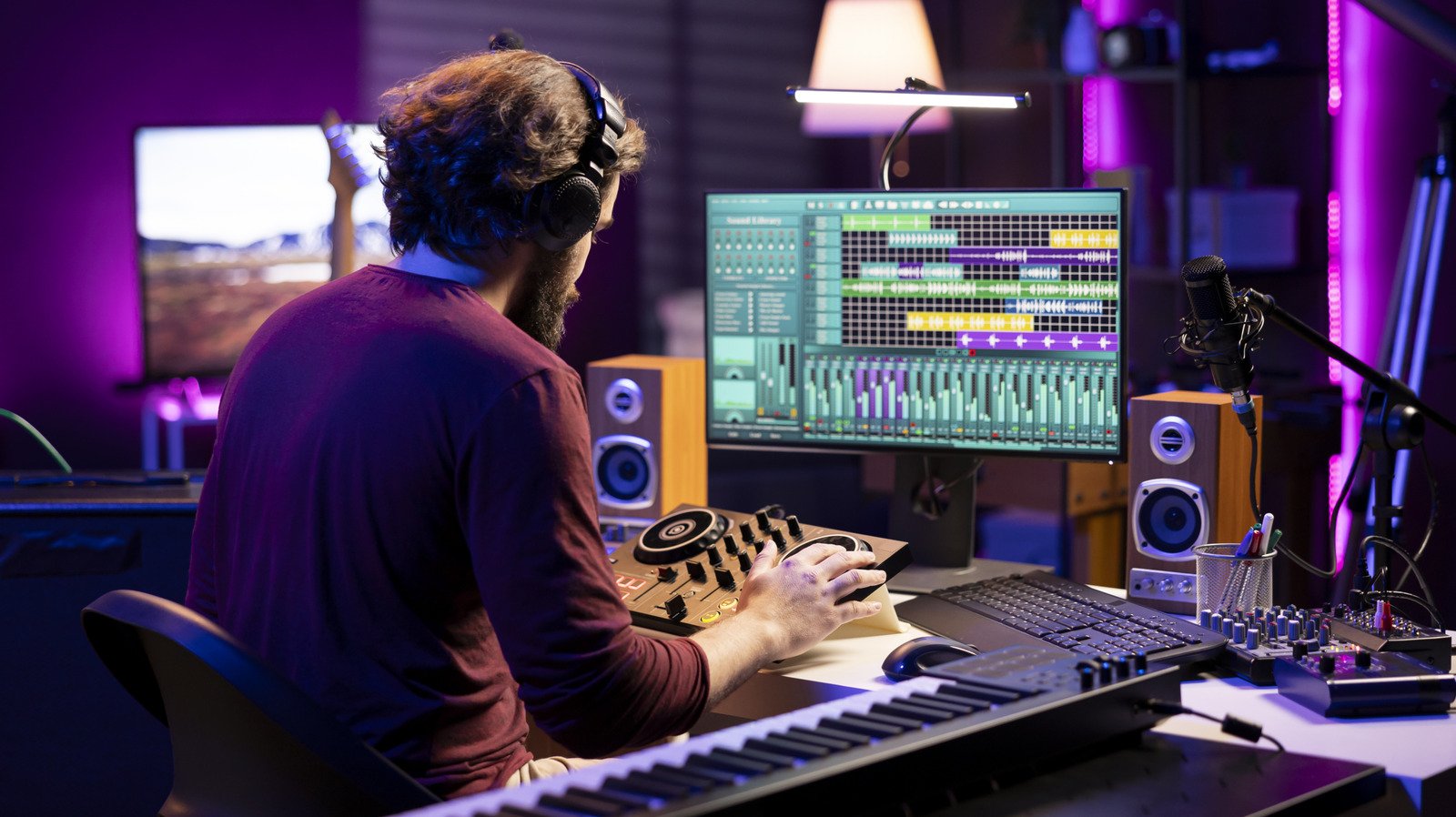
AI’s influence on music gear may be bigger than we thought.
Much has been made of artificial intelligence’s intrusion into the music space. Most have focused on agentic AI’s song generation capabilities, with proponents proclaiming the dawn of horizonless creativity and detractors decrying mass intellectual theft. And although the AI-slop flooding your Spotify app grabs all the headlines, it is the waves of AI-generated software flooding the audio engineering landscape that may have a more lasting impact.
Increasingly common, vibe coding is the practice of generating code by inputting common-language prompts into an AI chatbot. Somewhere between computer programming and wish fulfillment, it’s a cheap, easy way to create new software, whether you are an amateur or hold a master’s in computer science.
The democratization of code has opened the audio engineering gates to music enthusiasts using AI chatbots to generate new production software. Known as plugins, this software allows producers to add new instruments and effects to their digital Audio Workstation (DAW). Historically, developing these production tools was costly and technically difficult.
Computer programmers who use agentic AI will tell you that vibe coding isn’t the set-it-and-forget-it solution most imagine. Evan Mezeske, a former software engineer at Google, used the technique to build a new plugin known as Anukari and described his vibe coding technique during an interview with music production publication Music Tech. According to Mezeske, creating Anukari required “a huge thousand-line design essay and then a thousand iterations on that where I gave it feedback and provided direction.”
But with vibecoding, musicians, programmers, and companies have begun to flood the plugin space with new firmware for producers’ grooveboxes, synthesizers, and samplers. Creators are launching paid and open-source options onto platforms like GitHub at unprecedented rates, sparking some predictions for the plugin market to double by 2033. The flood of programs has sparked healthy doses of both optimism and skepticism in the music industry.
Vibing out your synth
Audio software poses unique challenges, as plugins must often be able to jump between operating systems and digital audio workstations. Creating plugins is extremely difficult, requiring multidisciplinary expertise across programming languages, audio engineering, and UI development. For non-coder musicians, this necessitated either sums of money to hire a team of software developers or an abundance of time to learn advanced coding. Ultimately, building and launching a plugin, no matter how great the idea, has historically been impractical for most music enthusiasts.
Of course, AI isn’t the first tool to make creating plugins more accessible. Systems like SynthEdit and FlowStone have allowed non-coders to build synthesizers and other modules, while visual programming environments have also let musicians build and share software tools. However, the threshold largely remained too high for most music lovers, with small synthesizer tweaks often taking weeks to program for coders and non-coders alike. With vibe coding, these time constraints can be drastically lowered. As one musician-turned-developer told The Verge, “I probably would have spent a massive amount of time and energy on just a single feature, whereas my real goal is to actually create and make music with amazing mods.”
These lowered thresholds enable designers to produce a host of creative new plugins. Mezeske’s Anukari, for instance, is a synthesizer that relies on “fully interactive 3D physics simulation” to produce unique music and sound effects, ranging from “alien communion” to “spiderweb gong chill time.” Lunacy Audio, meanwhile, used AI programs to help its audio engineers build Nova. Described by Lunacy as “like Google Docs for audio,” Nova allows users to download “unconventionally beautiful instruments from GRAMMY-winning composers and producers.” Tresse, a soft synth produced by Vald Labs, is another popular AI-assisted plugin garnering positive reviews.
But is the music good?
Before adding a Claude subscription to your home music production wish list, it should be noted that the quality of AI plugins is hotly debated. Critics argue that AI code generation often creates poor-performing applications, particularly for amateurs looking to break into the audio engineering business.
Rapper, producer, and plugin reviewer SumnSumnSumn HTK has led the crusade against “AI slop plugins.” The YouTuber has criticized vibe coding for a wave of poorly constructed replicas of popular audio software. This sentiment was echoed by Sam Willings, an editor at MusicTech, who lamented in an article that the website’s inboxes were flooded with an “untenable influx of AI slop” plugins. Others on social media have opined about the inability to trust the quality and functionality of AI-coded plugins.
Some have raised legitimate concerns about the data security of these programs, citing the prevalence of security issues plaguing AI-generated apps. According to a recent study by security researchers at Apiiro, AI-assisted teams produced code with 10x the security risks as their non-AI counterparts. This is an acute concern given the number of non-coders venturing into the space, as they might lack the programming skills to effectively check their AI agent’s work. Some argue that paywalls often limit the trend’s democratizing effect. Others have criticized their financial impact on non-AI plugin makers.
Musicians must hope that the plugin wheat will separate from the slop chaff. As John von Seggern, CEO of online music school Futureproof, argued in a blog post, the benefit of vibe coding is that it “moves the work of software development from typing out code, which AI is great at, to taste and decision-making, which you are great at.” Ultimately, the question facing the audio engineering community remains unchanged: is the music any good? Frankly, what else matters?
