

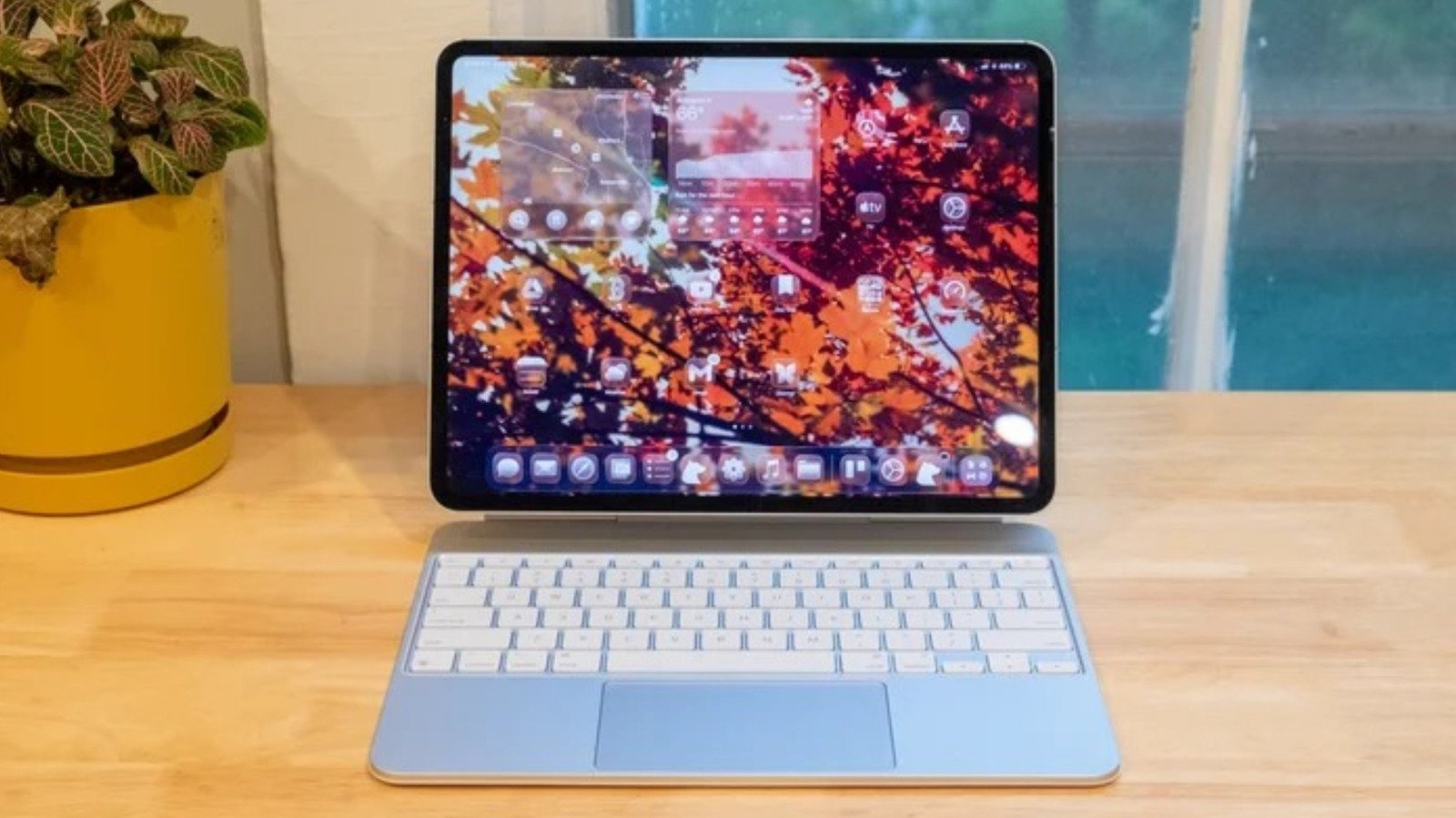
Apple’s iPad Pro is far from the only game in town.
We may receive a commission on purchases made from links.
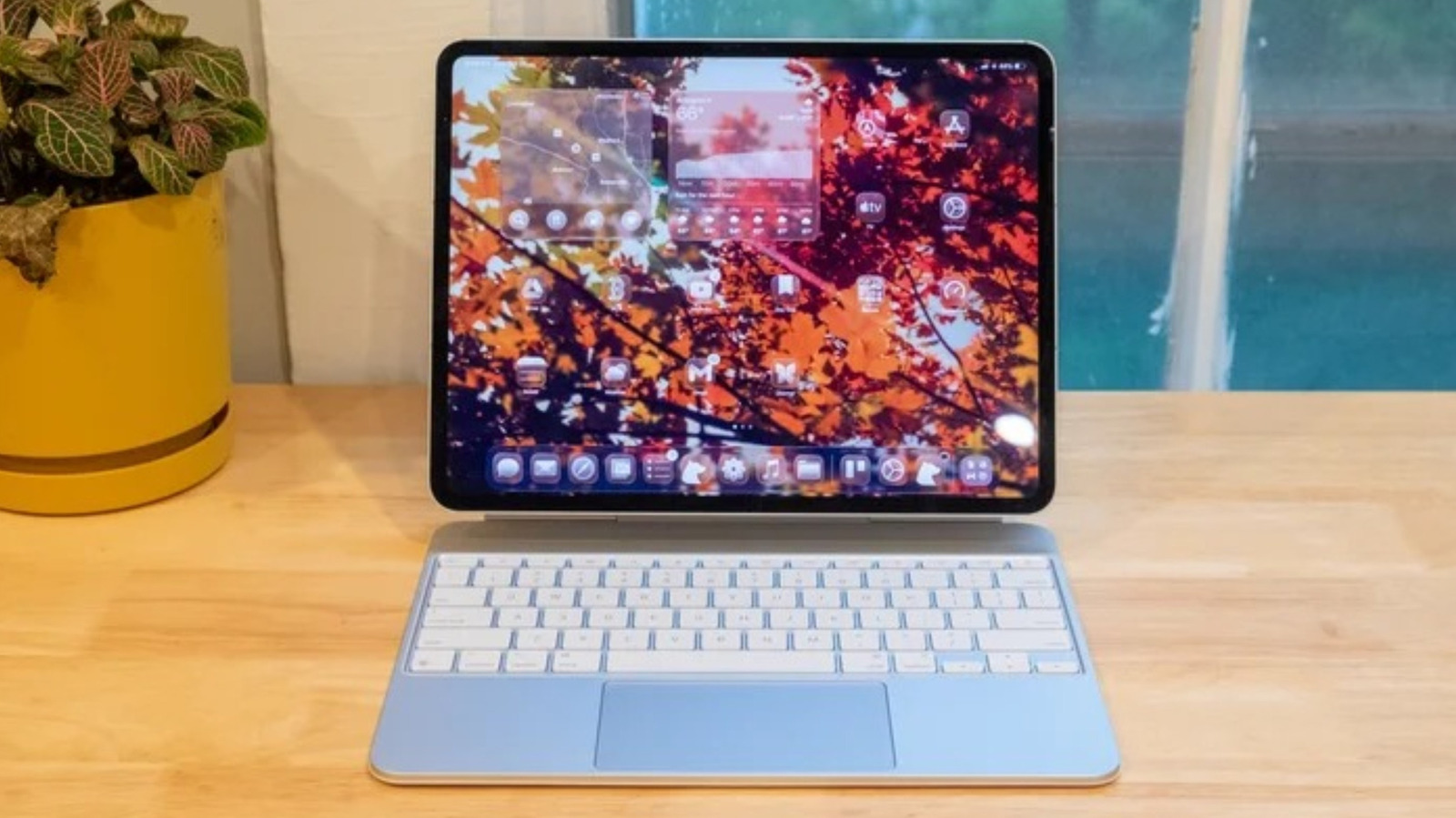
If you’re looking for the best tablet on the market — or at least the best with a mobile operating system — it is undoubtedly the 2025 iPad Pro. The latest iPad Pro sports Apple’s M5 chip, which powered the previous year’s MacBook Pro. It’s a chip so powerful that most users are unlikely to brush against its performance ceiling. The tandem OLED display is similarly overkill, and is a feature no other tablet available in North America has. Apple is so far ahead of its competitors in the high-end tablet market that it feels like Tim Cook wanted to taunt them with its existence.
But the iPad Pro is not perfect. The locked-down iPadOS experience means you’re limited to the apps Apple approves of. It also means you cannot install apps without signing into an Apple account. If you don’t own other Apple devices, things can get awkward as the iPad becomes siloed away from the rest of your gadgets, requiring you to find workarounds for syncing files or notifications.
Thankfully, things are getting more interesting for tablets outside of Apple’s walled garden. While no Android tablets can rival the iPad Pro’s performance, many offer other advantages such as ecosystem synergy with Windows PCs, gaming features, expandable storage or more included accessories. And if performance is what you’re after, it’s worth a gander at Windows tablets now that Windows on ARM is coming into its own.
The direct competitor: Samsung Galaxy Tab S12 Ultra
The easiest alternative to recommend is Samsung’s newest flagship tablet, the Galaxy Tab S12 Ultra. The first thing you’ll notice is its size: it looks like someone tore the screen off a full-sized laptop, with a 14.6-inch Dynamic AMOLED 2x display that dwarfs even the larger 13-inch iPad Pro. If you love watching videos on your tablet, this is the only device that can give the iPad’s luxurious tandem OLED display a run for its money. It also has Samsung’s anti-reflective coating, which the iPad lacks.
What you won’t get with the Galaxy tablet, or with any Android tablet, is the iPad Pro’s raw horsepower. The Galaxy Tab S12 Ultra’s MediaTek Dimensity 9500 processor is decently powerful, but it’s nowhere near the desktop-class Apple M5 chip in the latest iPad Pro. That said, the Galaxy has more than enough firepower for games, video editing, and other taxing tasks, and it comes with 12GB of RAM (or 16GB on the 1TB storage version) to help get the job done.
Samsung’s One UI is widely considered the best Android skin and an excellent alternative to iOS or iPadOS. It also has several features you won’t find elsewhere in the Android space. If you have a Windows PC, One UI lets you use the tablet as a second PC display, for example, or share your mouse and keyboard with your computer.
Despite its reduced performance, the Galaxy Tab S12 Ultra also competes with the iPad Pro on price. It starts at $1,400 for the 256GB model with 12GB of RAM and only gets steeper from there, maxing out at $2,000 for the 1TB model with 16GB of RAM.
The entertainment-focused alternative: Amazon Alexa Tablet 12 Pro
Until recently, Amazon made cheap, underpowered Fire tablets meant mostly for basic entertainment. The new Alexa Tablet 12 Pro bucks that trend. Alexa Tablets don’t compare that favorably to the iPad Pro, but they’re cheaper and make reasonable compromises. Amazon has also ditched its Fire OS Android skin in favor of a more traditional Android experience — crucially, with access to the Google Play Store.
Amazon’s head of hardware, Panos Panay, told Engadget the screen was the one component of the Alexa Tablet 12 Pro the company refused to compromise on. It has a slightly higher pixel density than the iPad Pro, with an optional matte coating similar to certain Samsung devices and Apple’s iPhone Duo. Our review of the Alexa Tablet 12 Pro found the MediaTek Dimensity 8400 chip inside presented no obstacles to productivity and entertainment tasks, but did stutter a bit while multitasking. You get eight and 16GB of RAM on the 128- and 256GB storage models, respectively.
If price is what turns you off from the iPad, Amazon’s starting price of $500 will be very appealing. However, that’s for just 128GB of storage, which will fill up quickly since it lacks a microSD card expansion slot. The Nanomatte display is an extra $50. If you want the top-spec 256GB model, expect to pay $680, with the Nanomatte display included.
The alternative for gamers: RedMagic Astra 2
If you want a powerful tablet with gaming-focused features at a more affordable price than the iPad Pro, look no further than the RedMagic Astra 2. Part of that lower price, though, is because the Astra 2 has a 9-inch screen, 2 inches smaller than the smallest iPad Pro. It makes sense for gaming — a large tablet can be tiring to hold up — but if you want a large screen for videos or productivity, this may not be the device for you.
The Astra 2 runs the Snapdragon 8 Elite Gen 5, making it arguably the most powerful Android tablet on this list, but still far short of Apple’s M5 chip. The biggest barrier to consistent performance on mobile chips is cooling: Most Android devices with top-end chips throttle them to prevent overheating, but RedMagic compensates with a large vapor chamber and real liquid cooling to dissipate heat. GSMArena benchmarks show that the cooling gives the Astra 2 a slight advantage over the OnePlus Pad 4, which uses the same Snapdragon chip.
RedMagic has equipped the Astra 2 with a few bells and whistles Apple doesn’t match. The display, though smaller, is more pixel-dense at 313 ppi vs. the iPad Pro’s 264, while its 185Hz refresh rate also beats the iPad Pro’s 120 (the newly updated iPad Mini is still stuck at 60Hz). It’s a bit brighter, too. All of this enables a better gaming experience, which emphasizes who this tablet is for.
Price-to-performance is another bright spot for the Astra 2. RedMagic charges $750 for the base 256GB model with 12GB of RAM, or $850 for the 512GB configuration with 16GB of RAM. That makes it the best bang-for-the-buck option on this list, assuming you approve of its gaming-focused design.
The do-it-all alternative for Windows users: Microsoft Surface Pro
Android tablets have plenty of nifty features, but none equal the iPad Pro’s desktop-class processing power. If that’s what you want, look to Windows. The Microsoft Surface Pro is more complicated than any other tablet on this list, but that’s because it has the full power of Windows 11 running on either a Qualcomm Snapdragon X2 Plus or X2 Elite processor.
The Snapdragon models are ARM-powered, just like the iPad. That gives them better battery life than traditional x86 Windows laptops, albeit at the cost of software support. Many apps aren’t yet optimized for ARM, and you’ll need to check whether the software you need is fully supported. Whether you want to deal with Windows 11 on a tablet is down to personal preference, but if you’ve used a Windows 11 PC in the past, the Surface Pro is no different. It’s a marked departure from the touch-optimized interface of iPadOS or Android, but professionals in need of pro-grade software will be able to get more done on a Surface Pro than on an Android tablet, and arguably more than on an iPad Pro, depending on which software is required.
The Surface Pro is as expensive as it is capable. The X2 Plus-equipped 12-inch model starts at $1,140 for the 256GB model with 12GB of RAM and an LCD. The 13-inch Surface Pro starts at $1,200 for the same configuration. If you want an OLED screen that bumps the refresh rate from 90 Hz to 120, you’ll also have to upgrade to the more powerful Snapdragon X2 Elite chip; that variant starts at $1,500, maxing out at $2,849 for the top configuration with 1TB of storage and 64GB of RAM.
