

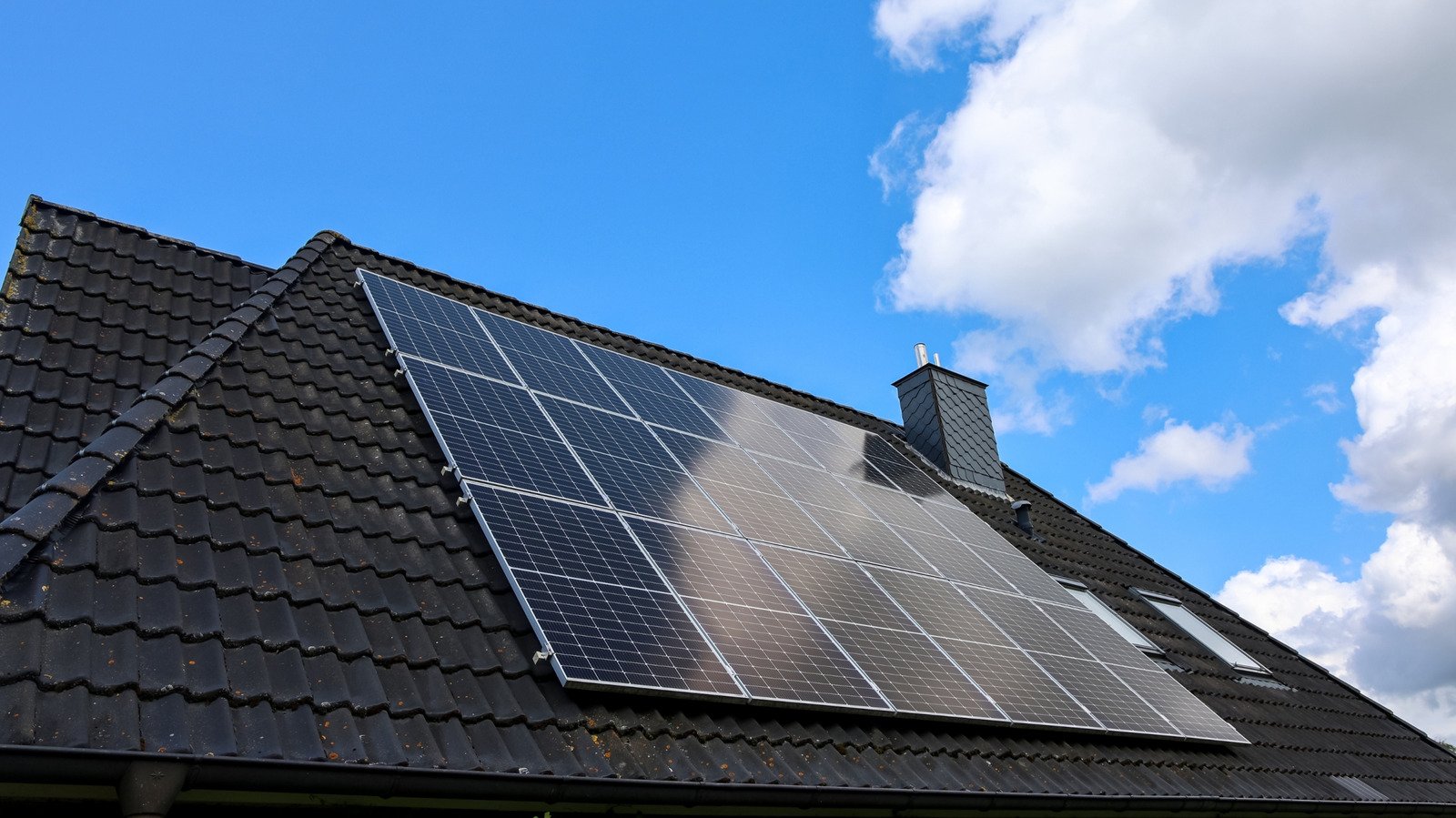
More efficient solar panels aren’t always the better buy. Your roof, budget and plans for backup power have a say too.
At first glance, all the solar panels in your neighborhood may look much the same, but what they’re made of can decide how much power they generate. Monocrystalline panels tend to generate more power per square foot compared to older polycrystalline models. And when skylights, chimneys and vents already take up some of the sunniest spots, picking the right solar panel can matter.
But just because a certain panel technology is more efficient doesn’t instantly make it the best choice. External factors like your electricity consumption, how much shade the panels get and what your utility pays for surplus energy can change the math considerably, so it can pay to size your system using the 20 percent rule for solar panels. That means building in enough capacity to produce around 20 percent more energy than your household normally uses as a buffer for dimmer days. At the same time, inverters, mounting hardware and labor for installing the equipment need to be accounted for too (no matter how compelling the brochure seems).
There’s also the burning question of what you’ll be powering up with those solar panels. Someone hoping to shave off some bucks on their monthly bill needs a different setup from one who needs their Wi-Fi and kitchen appliances to survive the next power outage.
Monocrystalline wins, but don’t stop reading the label
Between the monocrystalline cells (built from a single crystal of silicon) and polycrystalline cells, the former do pack a higher power density. These polycrystalline panels could be cheaper where they’re still available, but they also take up more space to produce comparable power. Thin-film panels, on the other hand, are built from thin layers of photovoltaic material, and while some are flexible and light enough for unconventional mounting, they’re hardly ever the first choice for a traditional pitched roof.
Modern monocrystalline panels come with cell technologies like TOPCon, HJT and PERC, just to name a few. While most of these aren’t based on entirely new materials, each has its own merits for boosting overall cell performance. Let’s take Qcells’ n-type Q.TRON BLK M-G2+, for instance, which can deliver 440W at 22.5 percent module efficiency, while Tesla’s 420W residential module is at least 20.5 percent efficient. Of course, it wouldn’t be a fair comparison without factoring in the size of the panels, but neither vendor’s specifications alone can give you a breakdown of how much power the panels will pump out for your specific roof.
And it isn’t entirely dependent on sunlight either, since solar panels tend to become less efficient as they get warmer. Plus, factors like shading and orientation of the panels can also make a sizable dent in the annual output. Sure, bifacial panels do exist for capturing reflected light from the back end, but this benefit is mostly dependent on how they are mounted, along with the environment.
How to compare solar panel installation costs and quotes
Now, before you sign up for anything, take a long minute to understand those installation quotes and what you’re getting for your money. The right way to do this is to compare projected annual electricity production and total expense rather than the wattage printed on the modules. Those details, like roof repairs, permits, inverters and warranty coverage, can make the quote comparison quite the ordeal.
To give you some context, the Solar Energy Industries Association reported that the price of an average US residential installation was $3.36 per watt in the second quarter of 2026. For perspective, one of our editors spent just over $24,000 on a 5.1kW installation, including inspections and permits. The federal residential clean energy tax credit ended for setups completed after December 31, 2025, but some state and local incentives may still apply.
You’re spending a small fortune on solar panels, but the good part is that they usually lose output over time rather than suddenly dying on you after a few years. That’s why taking a long and hard look at performance warranties could sometimes be just as important as looking at the upfront cost.
If the cost of a permanent rooftop array seems too much and backup power is your main goal, you can get a portable power station instead. Brands like Anker SOLIX, Jackery, BLUETTI and EcoFlow sell units that can charge up from a single panel or several compatible solar panels to keep a limited number of appliances powered on during a power outage.
